























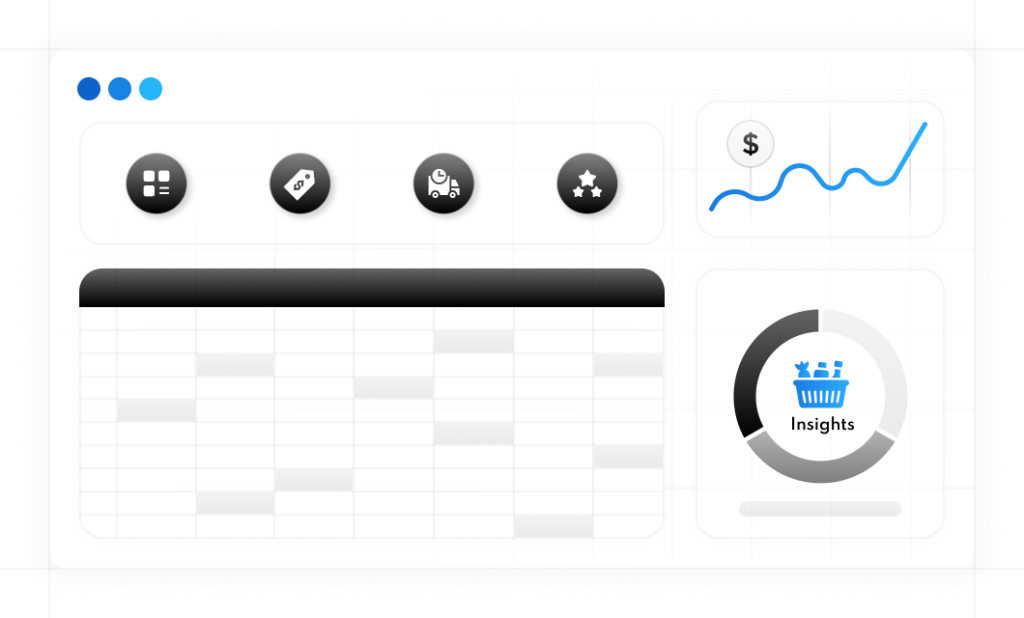
Grocery Data Scraping Solutions for Real-Time Retail Intelligence
iWeb Scraping delivers recruitment and market intelligence to efficiently make well-informed decisions that helps in menu intelligence and competitor research.


Trusted by Global Technology Leaders
Extract Pricing, Product & Availability Data from Online Grocery Platforms
The ability of grocery retailers to scrape pricing, product and availability information off the internet gives companies the ability to gain insight into the retail market dynamics around grocery products. Data scraping of grocery products allows companies to gather detailed data across multiple grocery retailers.
Companies can use the structured real-time grocery data to benchmark competitors’ pricing across all channels. The companies can also use the data to identify gaps in availability alongside identifying shifts in assortments. It also helps make faster and more informed decisions related to pricing strategy, inventory planning and market intelligence.
What is Grocery Product Data Scraping?
Grocery data scraping is basically the automated collection of publicly available information. This data is accurately extracted from online grocery/grocery retailer websites.
It collects key metrics of particular interest to grocery retailers, brands and analytics. This includes prices and stock availability among several other data fields.
This structured information gives grocery stakeholders visibility into current trends and enables them to monitor their competitors. It further assists retailers in making retail decisions by providing them with accurate market intelligence.
Benefits of Grocery Data Scraping
Some of the significant benefits of grocery data scraping for retailers and companies are obtaining accurate market insight and generating data-informed decisions across competitive grocery platforms.
Real-Time Price Visibility
Grocery pricing data is updated continuously across grocery platforms allowing for accurate monitoring of groceries' pricing changes, as well as helping to maintain a competitive price structure.
Improved Inventory Planning
Tracking grocery product availability across stores and regions allows retailers to study demand trends for items and use the information to aid in the planning of reorders.
Faster Decisions
Having current information regarding products allows teams to react quickly to fluctuations in the grocery market and create shelf plans based on consumer behavior.
Promotion & Discount Effectiveness
Analyzing promotional pricing and discounts among competitors allows retailers to quantify the success of their offerings. It also helps refine their promotional efforts to generate higher sales.
Reduced Manual Store Audits
Collecting grocery data through automated means eliminates the need for in-store audits and gives retailers more internal resources to devote toward high-value analysis and strategies.
Competitive Grocery Advantage
Having consistent insight into competitor pricing and assortment strategies will allow retailers to identify areas that need work and strengthen their position in the grocery market.
Use Cases of Grocery Product Data Scraping
Retail businesses can greatly benefit from grocery data scraping with the structured and accurate market data for a wide variety of uses.
Price & Promotion Intelligence
Data scraping of grocery information gives businesses access to all of their competitor’s pricing and promotional strategies. This allows a business to analyze patterns by way of market analysis and the effectiveness of promotional offers.
Real-Time Grocery Price Monitoring
Monitoring grocery prices in near real-time helps to identify instances of price fluctuation or regional pricing, making it possible to react quickly to market changes and adjust pricing strategies accordingly.
Discount & Offer Tracking
The ability to track discounts and promotional campaigns from competitors will allow a business to identify how its competition uses its promotions. It also helps identify how to adapt their discount strategy for higher sales and profit margins.
Price Comparison Across Retailers
A comparison of product prices between grocery retailers gives a business the ability to determine price gaps and differences between grocery retailers, as well as the ability to implement smarter pricing systems and make stronger marketing choices.
Assortment & Availability Intelligence
Grocery data scraping provides insight into the product assortments and availability of products on different platforms, thereby giving businesses an understanding of product assortment gaps and providing an opportunity to optimize product mix based on market trends.
SKU & Category Assortment Analysis
This analysis will provide businesses with information regarding SKU counts and assortment levels at the category level across multiple retailers. In doing so, businesses will be able to determine which product types they should consider expanding.
Out-of-Stock & Restock Monitoring
Monitor out-of-stock & restock patterns as well as restock activity across stores and regions for the purpose of assessing supply issues, forecasting demand spikes, and minimising lost revenue resulting from extended product availability issues.
Private Label & Brand Share Analysis
Monitor private label product presence across product categories as well as branded product presence by category to maintain insight into competitive balance, identify brand share shifts, and inform strategy regarding pricing, positioning and assortment strategy.
Market & Supply Chain Insights
Grocery data scraping gives business owners insights into their market’s price levels, product availability, assortment patterns, and other factors that help them understand where supply chain issues, demand fluctuations, and other inefficiencies are impacting retail success.
Demand Trend & Category Growth Analysis
Grocery data scraping provides retailers with an effective means of analysing historical data and real-time grocery market data to identify the real-time growth trends for product demand across the various product categories.
Store & Location Performance Tracking
Retailers can monitor pricing, availability and assortment performance at the store, city or even on a regional level to gauge localized retail performance and develop alongside implementing strategies based on geographic retail behavior.
Delivery Speed & Service Level Benchmarking
Retailers can benchmark their delivery times, fulfillment availability, and associated service levels so that they can successfully and easily establish customers' expectations regarding the quality of service that they are providing.
What Grocery Data Can We Scrape?
Grocery Product Information
- Product Name
- Product Category
- SKUs
- Product Weight
- Product Image URL
Pricing & Offer Data
- Product Price
- Discount Price
- Combo Offers
- Offer Percentage
- Coupon Availability
Inventory & Availability Data
- Stock Availability
- Delivery Availability
- Out Of Stock Status
- Store Availability
Location & Store Data
- Store Name
- Store Address
- City Name
- State Name
- Store Latitude
- Store Longitude
Customer Review & Rating Data
- Product Ratings
- Customer Reviews
- Review Count
- Customer Feedback
Delivery & Order Data
- Delivery Charges
- Minimum Order Value
- Express Delivery Availability
- Order Status
List of Popular Retail Websites
At iWeb Scraping, we provide accurate and actionable insights to cater to your business goals.
General Retail Marketplaces Worldwide
- Amazon
- Amazon
- Amazon
- Amazon
- Amazon
- Amazon
- Amazon
- Amazon
- Amazon
- Amazon
- Amazon
- Amazon
- Amazon
- Amazon
- Amazon
- Amazon
Leading Clothing & Apparel E-Commerce Sites
- Amazon
- Amazon
- Amazon
- Amazon
- Amazon
- Amazon
- Amazon
- Amazon
- Amazon
- Amazon
- Amazon
- Amazon
- Amazon
- Amazon
- Amazon
- Amazon
Top Tech & Electronics Marketplaces
- Amazon
- Amazon
- Amazon
- Amazon
- Amazon
- Amazon
- Amazon
- Amazon
- Amazon
- Amazon
- Amazon
- Amazon
- Amazon
- Amazon
- Amazon
- Amazon
Best Home Decor & Lifestyle Marketplaces
- Amazon
- Amazon
- Amazon
- Amazon
- Amazon
- Amazon
- Amazon
- Amazon
- Amazon
- Amazon
- Amazon
- Amazon
- Amazon
- Amazon
- Amazon
- Amazon
Why Choose Us
We provide dependable, scalable solutions that simplify how businesses collect, organize, and use information from digital sources.
Enterprise-Ready Crawling
Built for high-volume enterprise data extraction.
Accurate & Structured Data
Clean, verified, and business-ready datasets.
Global Data Coverage
Access data from worldwide digital sources.
AI-Powered Automation
Smarter automation for faster data processing.
Scalable Data Solutions
Flexible solutions designed for business growth.
Secure & Reliable Delivery
Safe, seamless, and timely data delivery with required format.
What Our Clients Say
We approached iWeb Scraping for extracting product listings from an osCommerce-based website along with multiple eCommerce platforms. Their team delivered clean, structured, and highly accurate datasets that perfectly matched our requirements. The entire process was smooth and professional.
I used iWeb Scraping services for an online job data extraction project, and the results were highly accurate and cost-effective. The data was delivered exactly as required, and I would definitely choose their services again for future data extraction needs.
I’m really impressed with the web scraping services provided by iWeb Scraping. The process was fast, seamless, and highly precise. The final dataset was accurate and delivered without any issues. We are fully satisfied with the outcomes.
My first experience with iWeb Scraping was for a small data extraction task, and it went exceptionally well. Since then, I have continued using their web scraping services regularly. Their accuracy, speed, and reliability make them one of the best companies I’ve worked with.
iWeb Scraping has been a valuable partner for our business. It’s rare to find a company that delivers web scraping, data extraction, and screen scraping services with such speed and precision. Their data quality and consistency have been outstanding.
Frequently Asked Questions
Find quick answers to the most common questions about our data extraction, APIs, and web scraping solutions
Grocery data scraping refers to the automated means of gathering data from the internet. This type of data collection is done regarding groceries and grocery stores. Grocery data scrapers gather structured information using advanced scraping tools. These datasets include pricing, SKU, promotional information, and product availability, and provide insight at the store level.
Grocery data scraping solutions are used by businesses to see how grocery markets are changing rapidly and how those changes impact their businesses. Scraping allows businesses to monitor their competition more easily and eliminate the need for blind spots in their market.
Many different businesses benefit from grocery data scraping solutions. Grocery Retailers, Fast-Moving Consumer Goods (FMCG) and Consumer Packaged Goods (CPG) brands, grocery distributors, data analytics teams, and market research companies can all utilize grocery data scraping to monitor competitors’ pricing, product availability, product assortment, and competitive benchmarks.
The type of grocery dataset you will get through scraping will depend on a number of factors including: A well-implemented scraping process will not just simply produce a dataset but will produce a dataset that contains the highest level of accuracy and reliability, allowing you to conduct price studies, make forecasts, and create retail strategies from this data.
Yes, grocery data scraped from the internet can be scaled to meet the needs of larger retailers by expanding to include a larger number of SKUs (stock-keeping units), by being updated frequently and by scraping grocery data across multiple platforms in multiple regions and marketplaces.
Available groceries can be gathered or scraped from digital stores. Basic grocery data that can be scraped includes product name, SKU, price, discount, promotion, availability status, brand name, category, package size and timestamps. The data fields you gather from a grocery scraping are dependent on how the digital store is laid out and what the goals are.
Yes, our grocery data scrapers are capable of being set up to collect data at the region level (by country, city, zip code, store location or delivery area) or by the store itself depending on the platform used to scrape the data.
Yes, we do provide historical pricing data for groceries. The availability of historical pricing data varies, depending upon the project scope. Within a defined time frame, we provide historical pricing data; promotional prices; availability trends and other information that can assist the clients in conducting trend analysis, benchmarking, forecasting and assessing for seasonality.
Yes. Customization of grocery classifications can occur by category, brand, or private label. Client-defined categories can be used to classify groceries, as well as brands and product attributes that clients choose to track. This enables businesses to generate relevant, focused information and data to analyze grocery products. In addition, the client is able to analyze their items by the target market for which they are intended, enabling them to report effectively and gain in-depth insight into brand performance, trends within grocery categories and standing against other brands in the grocery marketplace.
Yes, Q-commerce grocery data can also be scraped. Quick commerce provides quick delivery service and therefore has pricing, availability, selection, delivery time slots, and area of service coverage. Thus, businesses can assess their Q-commerce delivery offerings and perform the analysis based on speed, price premium, selection limitations, and area availability.
Dynamic grocery websites are built using JavaScript, have infinite scrolls and are frequently updated to add/remove information. The advanced scraping of grocery data uses artificial intelligence and machine learning techniques, with the help of automated browser extraction, to overcome these obstacles. The systems simulate real user behaviors and have tools to manage the lifecycle of dynamic content. The platforms continuously monitor them for changes in layout or updates to content, allowing for continuous and accurate collection of data.
The frequency of grocery data updates can be customized based on the requirements of the business that owns the data and the volatility of the data set. Datasets can be refreshed close to real time, hourly, daily or at a set frequency. High frequency updates allow for price intelligence and monitoring promotions while lower frequency updates are suitable for trend analysis and reporting.
The short answer is yes; grocery data can be delivered securely using API-ready data delivery methods. Grocery data APIs allow grocery data fetched through scraping to be integrated directly into the company’s internal systems, dashboards and analytics platforms. Furthermore, using grocery data via APIs eliminates the need for manual handling, enables grocery data to be automated, and keeps grocery data available to generate reports, create forecasts and conduct advanced analytics.
Grocery data will be delivered in a format that is analytics-ready. This is done so that there is a seamless method of connecting grocery data to the Business Intelligence and Analytics Tools. It will further will allow for easy access to reports and analysis. Grocery data will allow users to mix their own data with grocery data. Now this in turn also allows users to gain deeper insights and monitor key KPIs. Moreover, it helps support data-driven decision-making across pricing, merchandising & market intelligence functions.
Scraping grocery data is considered compliant under legal frameworks, allowing businesses to acquire publicly available information without requiring end-user login credentials, restricted account access or any confidential account information. Scraping also complies with all federal, state, local and international laws including, but not limited to, data privacy and data protection regulations as well as any relevant terms of service for grocery retailers’ websites. As we continue to monitor for any given changes in regulation and evolve our advanced workflows related to grocery data scraping, we will maintain an open and responsible grocery data scraping model.
Grocery data is protected at various points in the extraction and transmission process. For example, encrypted data transmissions, securely stored grocery data and access limited to authorized personnel provide different levels of protection for the grocery data. All stages of the grocery data lifecycle are secured with security protocols that ensure there is no opportunity for anyone to have access to or leak the grocery data before it reaches the client. The grocery datasets are continuously monitored using security best practices to ensure the grocery datasets remain protected while the data is being processed, transmitted, and delivered to the client securely.
No. A client’s grocery data will never be provided to a third party. All grocery datasets that have been extracted will always be considered confidential and will only be used for the client’s approved business purposes. Strictly written contractual agreements, access controls, and well-established governance frameworks all work together to ensure the data provided to the client will be kept as private as possible. This method protects the interests of the client, preserves the trust between the grocery data scraping company and the client, and maintains full accountability throughout each grocery data scraping project.
Yes, we comply fully with both the GDPR and applicable data protection REGS. We only collect public, non-identifiable grocery data, and no customer-identifiable data is collected. We also handle the grocery data in accordance with the highest privacy standards. We collect the minimum necessary amount of data to perform our functions, securely store it, and control access to the data. The above steps allow us to be in compliance with regulatory agencies as well as significantly reduce the legal and reputational risk for any company that uses a grocery data scraping solution.
We have strictly confidential and secure methods for storing sensitive pricing and inventory data. Access is limited to those employees authorized by the management team and the data is stored in a secure environment with monitoring and audit processes in place. We follow appropriate usage guidelines and have contractual safeguards in place that only allow for the approved use of the sensitive data to perform analytical functions to protect sensitive business insight and allow for ethical, accurate, and compliant retail intelligence initiatives.
Our Latest Insights
Our latest Insights help you to thoroughly understand our professional data scraping services.
How to Scrape Lazada Product Data Without Getting Blocked?
Real-time product data is at the core of every smart pricing strategy in Southeast Asian e-commerce. Whether you are tracking …
iwebscraping
Reading Time: 7 min
Football Data Extraction for Sports Analytics: Complete Guide (2026)
Football generates more structured data per ninety minutes than almost any other sport on the planet. Tracking coordinates, shot quality …
iwebscraping
Reading Time: 11 min
Instacart Data Scraping for Grocery Price Intelligence (2026 Guide)
Pricing decisions made on incomplete data cost brands money every single day. A competitor drops the price on a top …
iwebscraping
Reading Time: 8 min
Crawling Hotel Prices Using Pricing Optimization
iwebscraping
Reading Time: 0 min
Scraping restaurant and menu Information
iwebscraping
Reading Time: 0 min
Amazon Product Data Scraping: Identify Best Selling Amazon Products
iwebscraping
Reading Time: 0 min
Build the Right Solution for You
Share your requirements, and we will definitely deliver a solution that will satisfy your needs perfectly!
Quick Response
Fast replies guaranteed
Expert Team
Driven by expertise
Secured Process
Built with strong security
Ongoing Support
Support whenever you need
Save Time & Money
Bulk data delivery in less time.
Complex & Varied Data
Hassle-free handling of JavaScript, logins, APIs, and dynamic.
Custom-Built Pipeline
Designed as per your requirements and scalability.